


Japan’s major convenience store chain, 7-Eleven, will launch a groundbreaking product starting Wednesday, January 21, 2026. It’s frozen gyoza (pan-fried dumplings) recreating the flavors of two cities leading Japan’s gyoza culture: “Utsunomiya” and “Miyazaki.”Notably, these two products are not available nationwide simultaneously; instead, they are “region-limited items” sold in separate areas.
The two varieties launching are “Seven Premium Utsunomiya Gyoza Association Supervised Pan-Fried Gyoza” and “Seven Premium Miyazaki City Gyoza Council Supervised Pan-Fried Gyoza.” These are authentically supervised by the “Utsunomiya Gyoza Cooperative Association” and the “Miyazaki City Gyoza Council,” the organizations supporting gyoza culture in each city.While they appear as part of the “Cook Quick” series of easy-to-prepare Japanese convenience store foods, they are not the simple microwave-heated type. Cooking them in a frying pan yields an authentic finish that rivals specialty shop flavors.
Utsunomiya Style Featuring Vegetable Sweetness
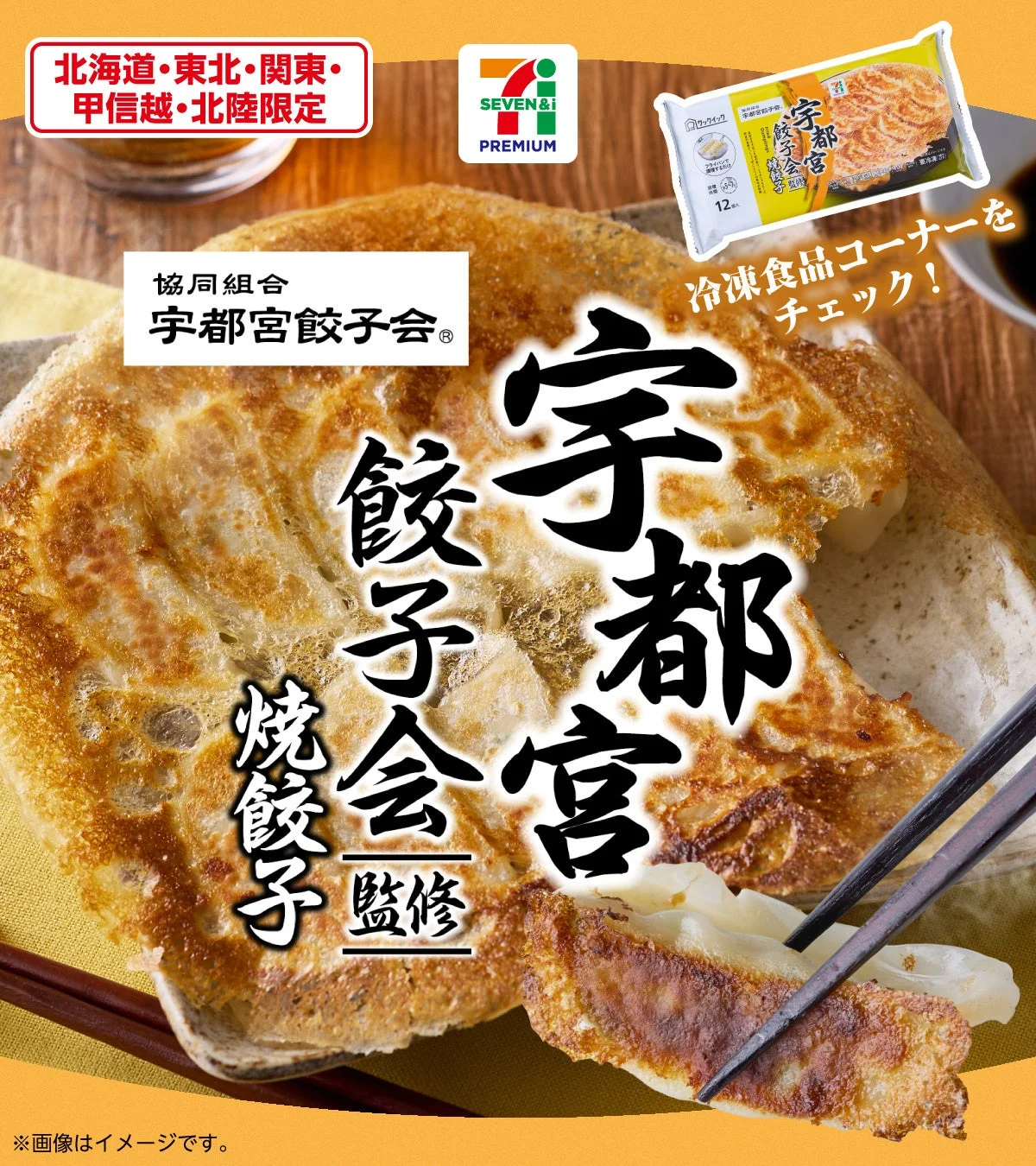
Travelers staying in the East Japan area (including Tokyo, Hokkaido, Tohoku, Kanto, Koshinetsu, Hokuriku) can experience Utsunomiya-style gyoza. The price is 298 yen (321.84 yen including tax). Utsunomiya City is renowned as the “City of Gyoza,” boasting top-class gyoza consumption in Japan for many years.
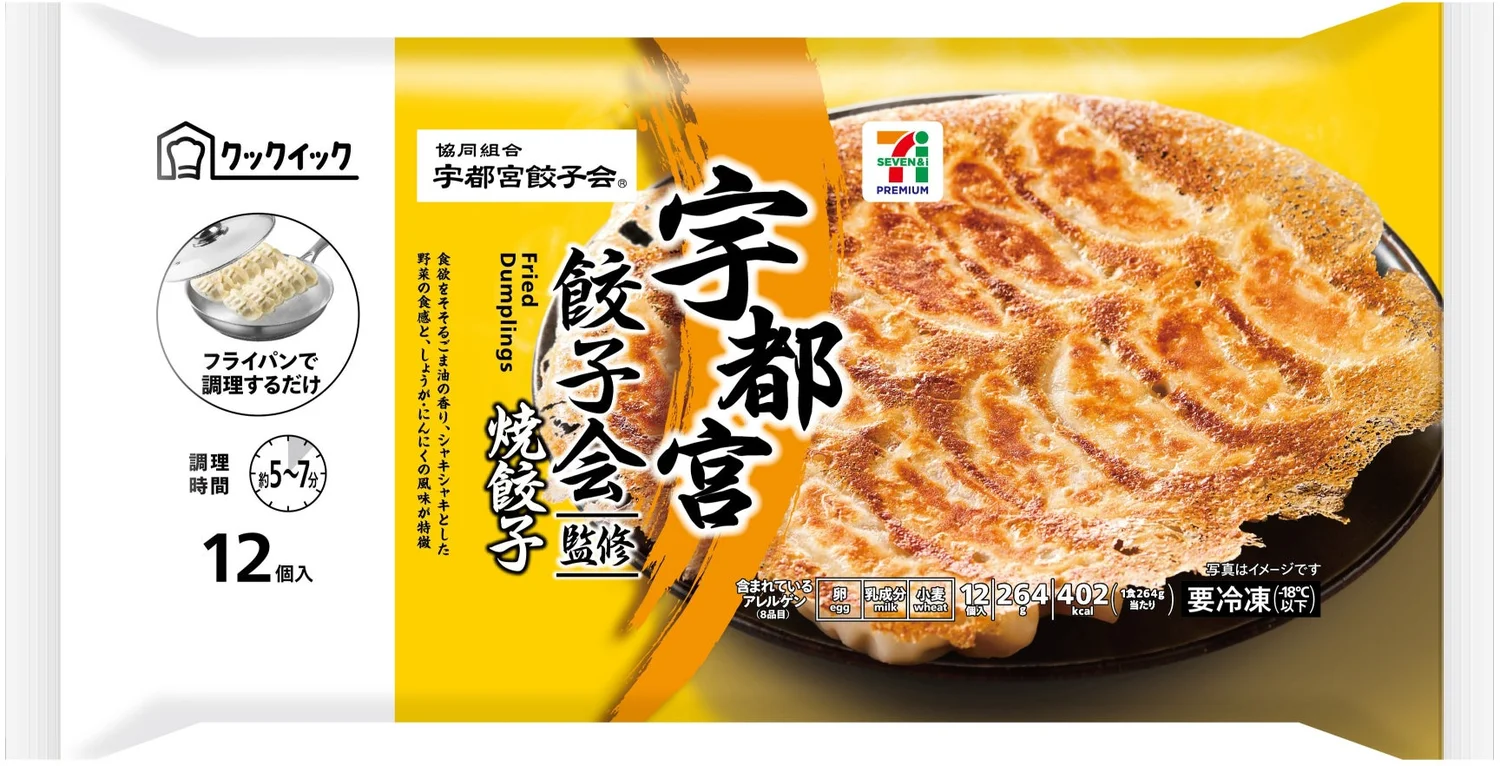
The defining characteristics of Utsunomiya gyoza are the sweetness of the vegetables and the substantial dough. This product faithfully recreates these features, with the dough made slightly thicker. The crispy texture on the bottom when cooked and the chewy, elastic bite when you bite into it create a delightful contrast – a unique pleasure only achievable with this thicker dough.
The filling generously incorporates large chunks of cabbage. Each bite delivers a satisfying crunch from the vegetables. Aroma is also crucial; the use of sesame oil means a tantalizing, savory fragrance fills the kitchen even while cooking.According to the supervising Utsunomiya Gyoza Association, precisely because Utsunomiya gyoza lacks strict definitions, they focused on recreating “the time-honored taste beloved by locals for generations, bursting with vegetable umami.” Expect rich, savory flavor that’s delicious even without dipping sauce.
Miyazaki Style: Rich Lard Flavor and Thin Skins
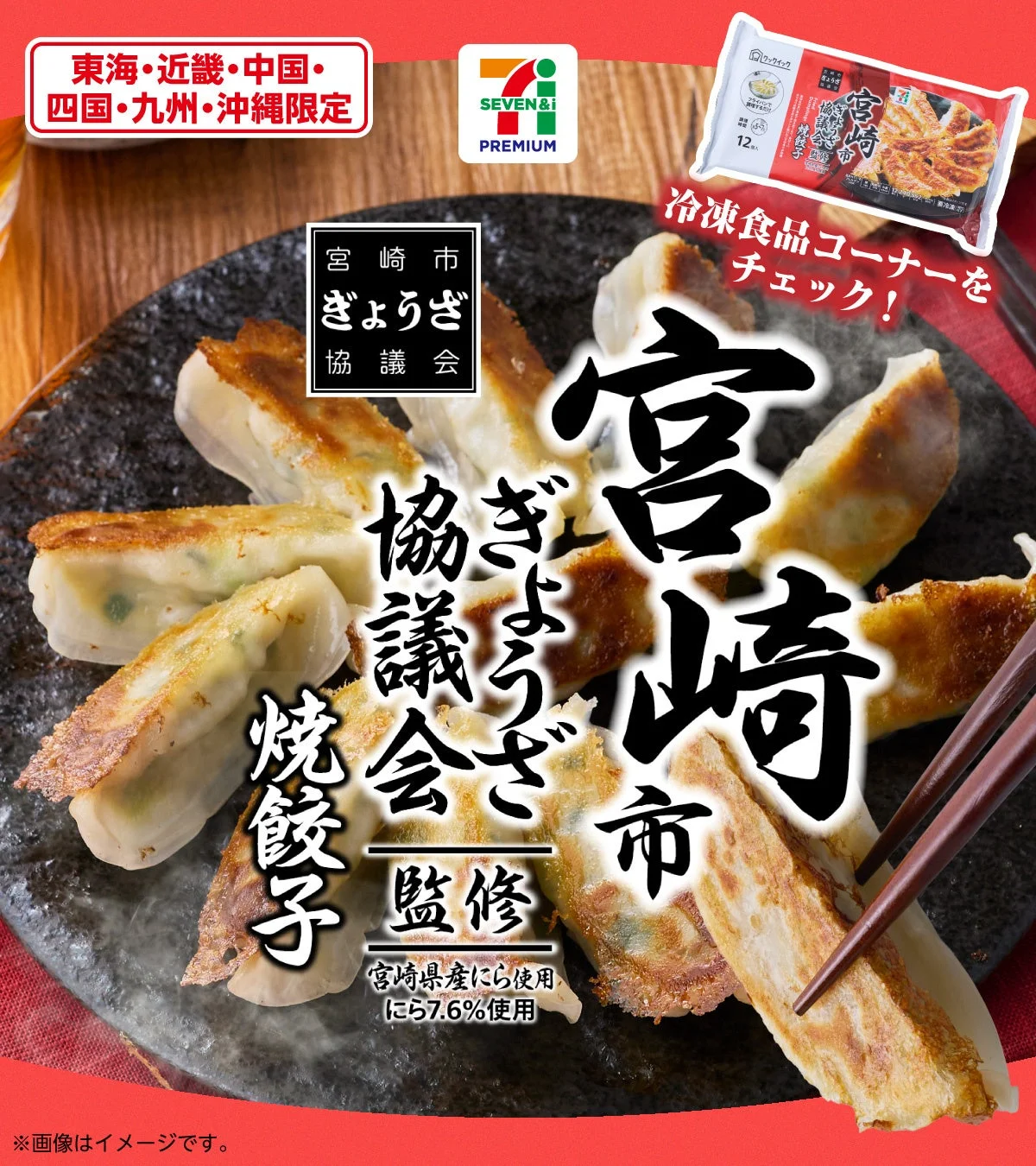
Visitors to the Western Japan area (Tokai, Kinki, Chugoku, Shikoku, Kyushu, Okinawa), including Kyoto, Osaka, and Fukuoka, can purchase Miyazaki-style gyoza. These are also priced at 298 yen (321.84 yen including tax). Miyazaki City has emerged as a new gyoza mecca, fiercely competing with Utsunomiya for the top spot in recent years based on gyoza purchase frequency and expenditure.
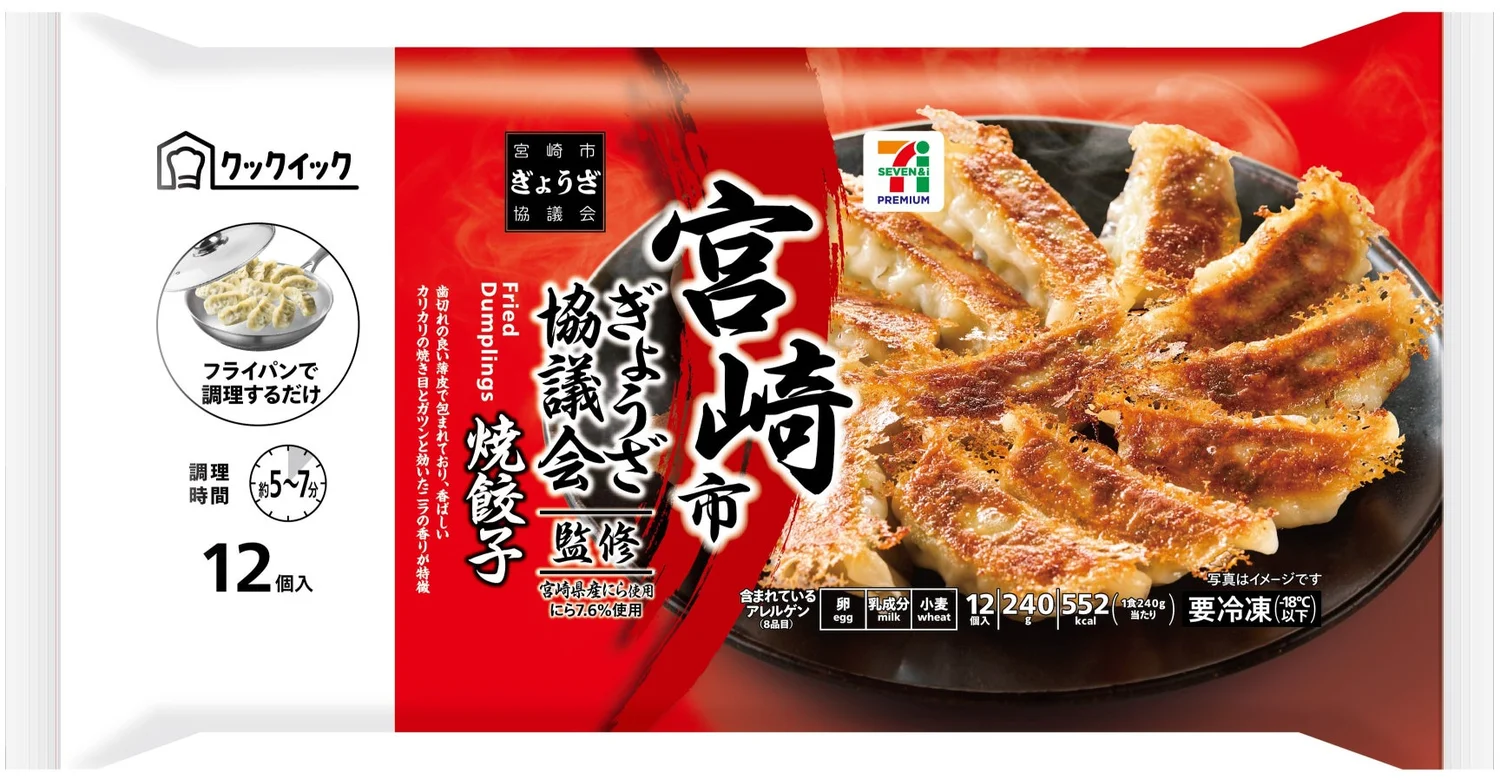
Miyazaki gyoza are characterized by their rich, savory flavor from lard and a light texture from their thin wrappers. This product recreates the savory aroma reminiscent of lard-fried gyoza, delivering an intense impact the moment it hits your palate.
A key feature is the use of Miyazaki-grown Chinese chives (nira) in the filling.The sweetness of cabbage combines with the robust aroma of Chinese chives, creating a flavor that pairs perfectly with white rice or alcohol. The thin wrapper and bite-sized portions make them light enough to eat one after another. The supervising Miyazaki City Gyoza Council stated they aimed for an exquisite contrast in texture: “crispy on the fried side, chewy on the steamed side.” The richness of lard and the flavor of Chinese chives should pair exceptionally well with Japanese beer.
Japan’s Freezing Technology Delivers a “Foolproof” Cooking Method
This product isn’t just a recreation of a local flavor. It showcases the excellence of Japanese frozen food technology with a perfectly balanced design emphasizing “time-saving” and “minimal effort.”
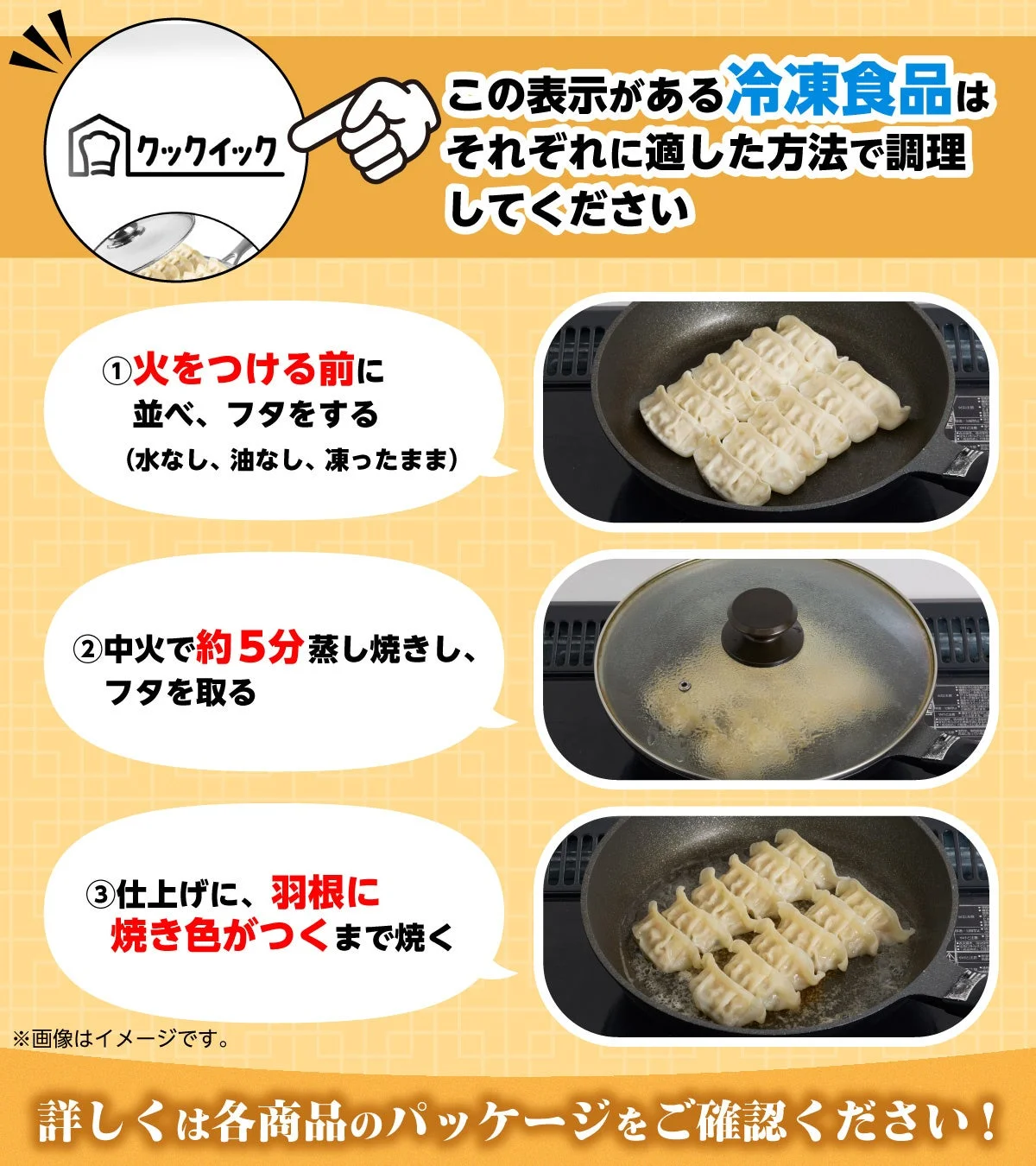
The cooking process is surprisingly simple. Arrange the frozen gyoza directly in a frying pan, cover, and cook over medium heat for about 5 minutes.Finally, remove the lid and brown the thin “wing” (crispy skirt) that forms on the bottom of the dumplings to finish. Remarkably, no water or oil is needed at all. Typically, steaming with water and browning with oil are required when cooking gyoza, but this product eliminates both steps. This is made possible by Japan’s latest freezing technology.

According to a large-scale survey of 1,000 people conducted by 7-Eleven, the most common failure when cooking frozen gyoza at home was “the skin sticking to the pan and tearing (40.9%)”. Next, many also complained about “the result being soggy instead of crispy (28.8%)”. Seeing a dish fall apart is sad for cooks everywhere.
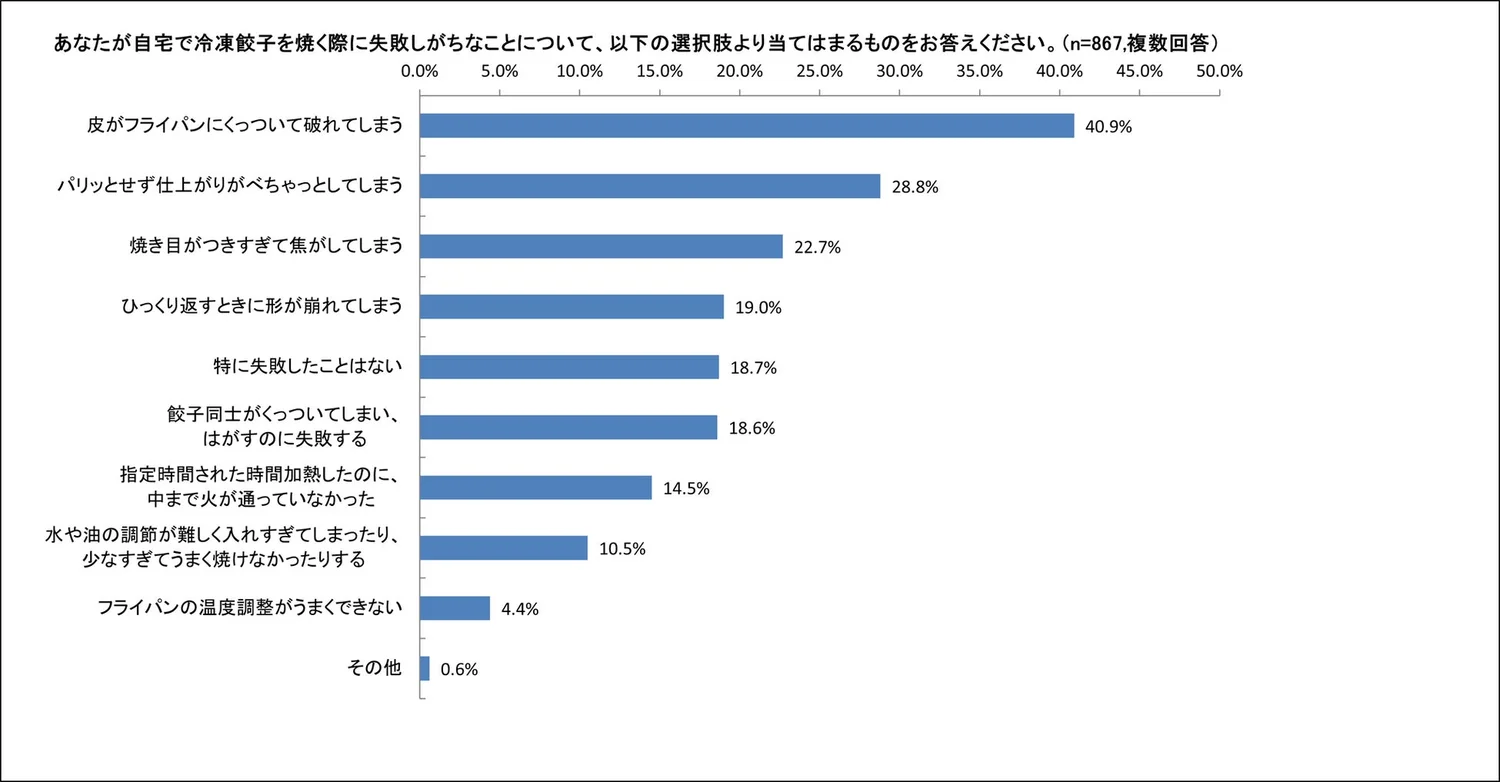
This product was developed to thoroughly solve such “home cooking failures.” It’s designed so anyone can easily achieve professional-quality “crispy edges” and “juicy filling.” The survey also showed over 30% of respondents prioritized “ease of cooking,” making this product the perfect answer to that need.
Furthermore, the survey revealed many respondents associated gyoza with “getting both vegetables and meat in one bite” and “having substantial, satisfying texture.”Gyoza are popular not only as a main dish but also as a quick extra side or a snack with drinks. This product comes in a 12-piece pack, but the tray is designed in a 3-row format that can be separated, allowing for smaller portions. You can easily cook just 3 pieces for a late-night snack.

Key Points to Check During Your Stay in Japan
Finally, let’s reconfirm the sales areas. When searching for them at convenience stores while traveling in Japan, you need to know which area you are in.
The thick-skinned type, supervised by the Utsunomiya Gyoza Association, is sold at approximately 12,439 stores in Hokkaido, Tohoku, Kanto, Koshinetsu, and Hokuriku. The thin-skinned type, supervised by the Miyazaki City Gyoza Council, is sold at approximately 9,216 stores in Tokai, Kinki, Chugoku, Shikoku, Kyushu, and Okinawa.
If you’re staying near the boundary between east and west, you might be able to get both flavors with just a little travel. Or, if your itinerary involves traveling from Tokyo to Kyoto by bullet train, buying and comparing different gyoza from each region could be a connoisseur’s way to deeply experience Japanese food culture. Why not try some local gyoza for dinner tonight, where Japan’s cutting-edge technology meets traditional flavors? Be sure to look for them at your nearest 7-Eleven.
Post a Comment