


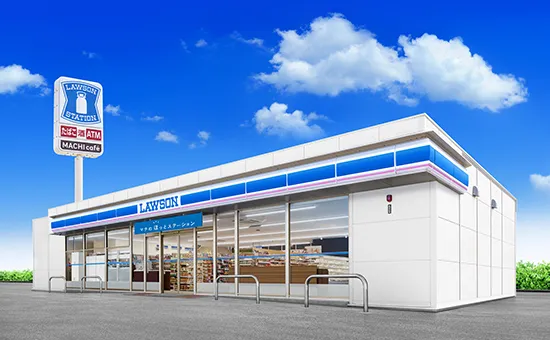
Japanese convenience store chain Lawson has reopened a future-oriented new store, the “Lawson Nakagawa-ku Noda 2-chome,” in Nagoya City, Aichi Prefecture, aiming to balance environmental consciousness with disaster preparedness. This store is not merely a retail outlet but an experimental ground for the “convenience store of the future,” leveraging the latest technology to address energy issues and explore its role as a piece of social infrastructure.
This project was brought to life through a collaboration not just with Lawson, but also with leading companies in the energy and technology sectors, including Aisin, MC Retail Energy, Chubu Electric Power, and Chubu Electric Power Miraiz.
“Local Energy Production for Local Consumption”: Generating and Using Electricity On-Site
The most defining feature of this store is its maximum utilization of renewable energy. Solar panels have been installed not only on the store’s roof but also on the parking lot’s carport roof. Additionally, new types of solar cells are fitted onto the window frames, enabling the entire store to actively generate power.
The generated electricity is, of course, used to power the store’s operations. However, on sunny days, electricity generation can exceed consumption. This surplus power is stored in large-capacity batteries located in the parking area. By using this stored electricity at night or during bad weather, the system ensures that the energy consumed by the store is as clean as possible.
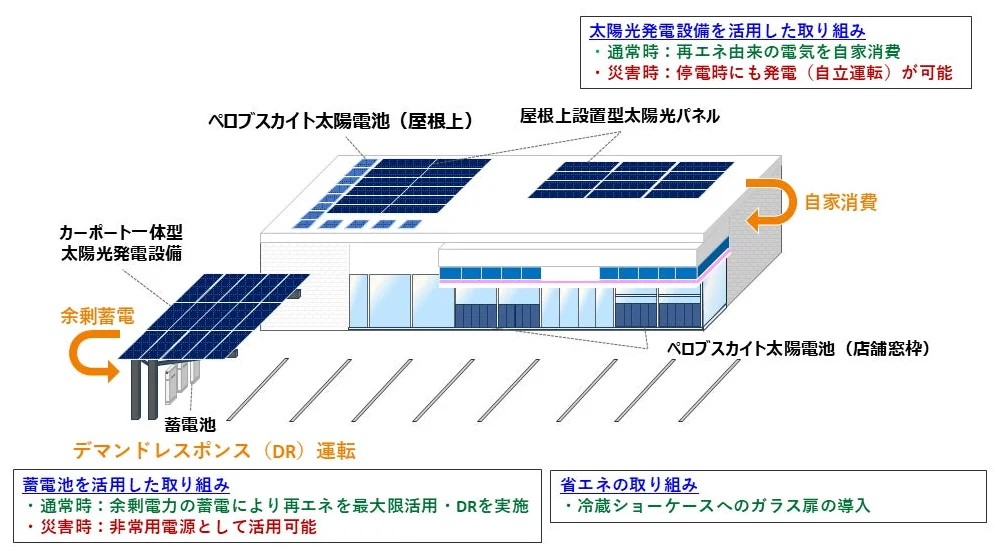
Furthermore, the refrigerated and frozen display cases inside the store are fitted with glass or acrylic doors. While this might still be an uncommon sight in convenience stores across Japan, it is a crucial measure to prevent cold air from escaping and to reduce electricity consumption.
Through these initiatives, the store aims to cover approximately 14% of its annual electricity consumption with renewable energy, contributing significantly to the reduction of CO₂ emissions.
A Reliable Role as Social Infrastructure During Disasters
Japan is a country prone to natural disasters such as earthquakes and typhoons. Consequently, maintaining infrastructure during such events is a critical challenge. This new Lawson store is taking progressive steps to address this issue.
In the event of a power outage caused by a disaster, the electricity stored in the batteries can be utilized to keep POS registers, some of the store’s lighting, and electrical outlets running. This allows the store to avoid a complete shutdown and maintain its function as a lifeline for the local community. It showcases a new value for convenience stores, one that makes people genuinely feel, “I’m glad they’re open,” during an emergency.
Demonstration of “Perovskite Solar Cells”: The Solar Cells of the Future
This store is pilot-testing “Perovskite Solar Cells,” a next-generation solar technology that is currently attracting worldwide attention.
Unlike conventional silicon-based panels, these solar cells possess the remarkable characteristics of being both lightweight and flexible. This creates the potential for installation in a variety of locations previously deemed unsuitable due to weight or shape constraints, such as building facades and less durable rooftops. At this store, Aisin and Chubu Electric Power are collaborating to test how effective they are at generating power in a real retail environment and to determine the best installation methods. This experiment marks an important step toward the broader societal adoption of this innovative technology.
Contributing to “Demand Response (DR)” to Support the Power Grid
Furthermore, the store also contributes to the stability of the power supply. MC Retail Energy remotely controls the storage batteries, enabling the store to participate in an initiative known as “Demand Response (DR).”
DR involves businesses and households adjusting their electricity consumption in response to requests from utility companies to balance power supply and demand. The importance of DR is growing, particularly with the increased reliance on solar and wind power, where generation levels fluctuate depending on the weather. By automatically optimizing the charging and discharging of its batteries, this store can contribute to the stabilization of the power grid without requiring any special action from store employees.
In this way, the Lawson Nakagawa-ku Noda 2-chome store pushes the concept of “convenience” that Japanese convenience stores are known for one step further, showcasing the potential to contribute to solving environmental and social challenges. The next time you visit Japan, perhaps you’ll want to take a closer look at what the convenience store of the future holds.
Post a Comment