


To all the convenience store fans across the globe and lovers of Japanese pop culture, some major news has just landed. According to a report published today, February 17, 2026, by the Nihon Keizai Shimbun (Nikkei), the Japanese convenience store giant Lawson has officially decided to make its full-scale entry into the Indian market.

This isn’t just a corporate expansion; it represents the export of a culture. The pristine floors, the polite bowing clerks, the surprisingly high-quality food—that specific “Konbini” experience that travelers to Japan rave about—is about to become part of the daily landscape in India, the world’s most populous country. The “Japanese System,” which has already proven its worth in China and Southeast Asia, is now set to be tested in the diverse and energetic market of India.
How will Lawson function in such a dynamic environment? Let’s dig into the details of this big news and the “new breeze” Lawson is expected to bring to India.
The Full Scope of the “Mumbai Project” Reported by Nikkei
According to the Nikkei report, Lawson’s expansion plan for India is based on a very concrete and strategic roadmap. The company intends to use the massive economic hub of Mumbai as its foothold to steadily build a fanbase.
- Establishing a Local Entity: The foundation comes first. Lawson plans to establish a wholly-owned subsidiary (100% Lawson) within fiscal year 2026. By avoiding a joint venture initially and starting with 100% ownership, there is a clear intention to strictly control brand quality and standards from day one.
- The Historic First Store: In 2027, Lawson plans to open 5 stores, including directly operated ones, in Mumbai—India’s largest commercial city and the heart of the entertainment industry.
- Expansion Plan: Starting from 2027, the goal is to expand the network to 100 stores by 2030.
- Ultimate Vision: Lawson envisions this becoming a major pillar of its overseas business, eventually rivaling its operations in China (which currently has about 6,600 stores).
Why India, and why now? The reasons are clear. The domestic market in Japan has matured, with limited room for new store openings. Conversely, India is seeing an explosive rise in the “middle class” due to economic growth. These consumers are shifting from price-focused shopping to seeking services that offer “safety, cleanliness, and convenience,” even at a slight premium. Lawson’s entry perfectly matches this shift in market maturity and consumer needs.
Will “Karaage-kun” Become a Legend in the Land of Chicken?
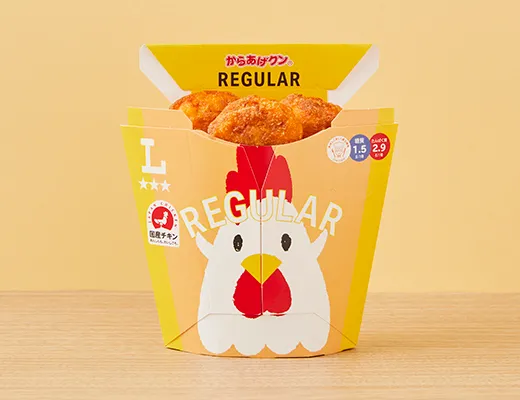
For overseas readers, it’s important to understand the unique personality of the Lawson brand. While 7-Eleven and FamilyMart are powerful rivals in Japan, Lawson boasts overwhelming popularity and uniqueness in the realms of sweets and hot snacks.
Particular attention should be paid to “Karaage-kun,” a bite-sized fried chicken snack that can effectively be called Japan’s national hot snack. There is no weapon more powerful than this for entering the Indian market. While many people in India avoid beef or pork due to religious reasons, chicken is widely loved.
The phrase “product development capabilities honed in Japan” found in the source material suggests we can expect exciting localized products. Imagine this future: Japanese-engineered Karaage-kun sold on the streets of Mumbai in “Masala Flavor” or “Authentic Butter Chicken Curry Flavor.” With its crispy texture and juicy meat, combined with local spicy seasoning, it has the potential to become instant soul food for the locals.
A New Lifestyle Proposed by “Konbini”
Lawson isn’t just exporting products; the Japanese store operation know-how itself could revolutionize the Indian retail market.
India has countless traditional “Kirana” shops (small mom-and-pop stores) that support local life. Lawson won’t compete directly with them but will instead offer a completely different “premium experience.”
- Thorough Temperature Control: In Mumbai, where it is hot year-round, keeping sandwiches, onigiri, and sweets chilled at the perfect temperature and always fresh is vital. The construction of this “cold chain” (low-temperature logistics network) is the lifeline of a convenience store.
- Cleanliness and “Omotenashi”: Dust-free floors, neatly organized shelves, and the energetic greeting of “Irasshaimase!” (Welcome!). This Japanese culture of hospitality elevates shopping from a mere chore to a form of entertainment.
- Evolving “Nakashoku” Culture: “Nakashoku” refers to “home meal replacements”—ready-to-eat bento boxes and deli items that sit between dining out and cooking at home. For busy business people in Mumbai, an environment where they can quickly buy hygienic, delicious meals will likely impact their lifestyle significantly.
Solid Backing from Success in China
One might hear that “the Indian market is difficult,” but Lawson likely has confidence. This is because they have already achieved massive success in the Chinese market.
With about 6,600 stores in China, they have mastered product development tailored to local tastes and efficient operations using digital technology. Their strength lies in flexibility: not forcing the “Japanese way” on a market, but “adapting the Japanese way to the local culture.” This experience will undoubtedly be an asset in India, despite the cultural differences.
With competitors like 7-Eleven already entering India, Lawson’s participation will create healthy competition, raising the overall level of service. This is fantastic news for Indian consumers.
A Message to Travelers: See You in Mumbai in 2027
If you are planning a trip to India in or after 2027, you now have one more thing to look forward to.
After being overwhelmed by the majestic flow of the Ganges or the beauty of the Taj Mahal, finding that familiar blue and white sign in Mumbai will bring a unique sense of comfort. There, you will find a Lawson that feels just like Japan, yet delightfully different—uniquely evolved for India.
Perhaps the Onigiri filling will be a spicy chickpea curry, or the “Uchi Café” sweets will feature exotic flavors like mango or cardamom. Tasting and comparing these local Lawson products will be the most delicious shortcut to understanding the culture.
The project is now in motion toward the establishment of the local subsidiary in FY2026 and the grand opening in 2027. We are about to witness history as the “art form” known as the Japanese convenience store begins to paint on the massive canvas of India. Let’s support this challenge, believing that a new convenience culture from Mumbai will one day surprise the world.
Japan convenience chain Lawson to enter India, targeting middle class|Nikkei Asia
Post a Comment