


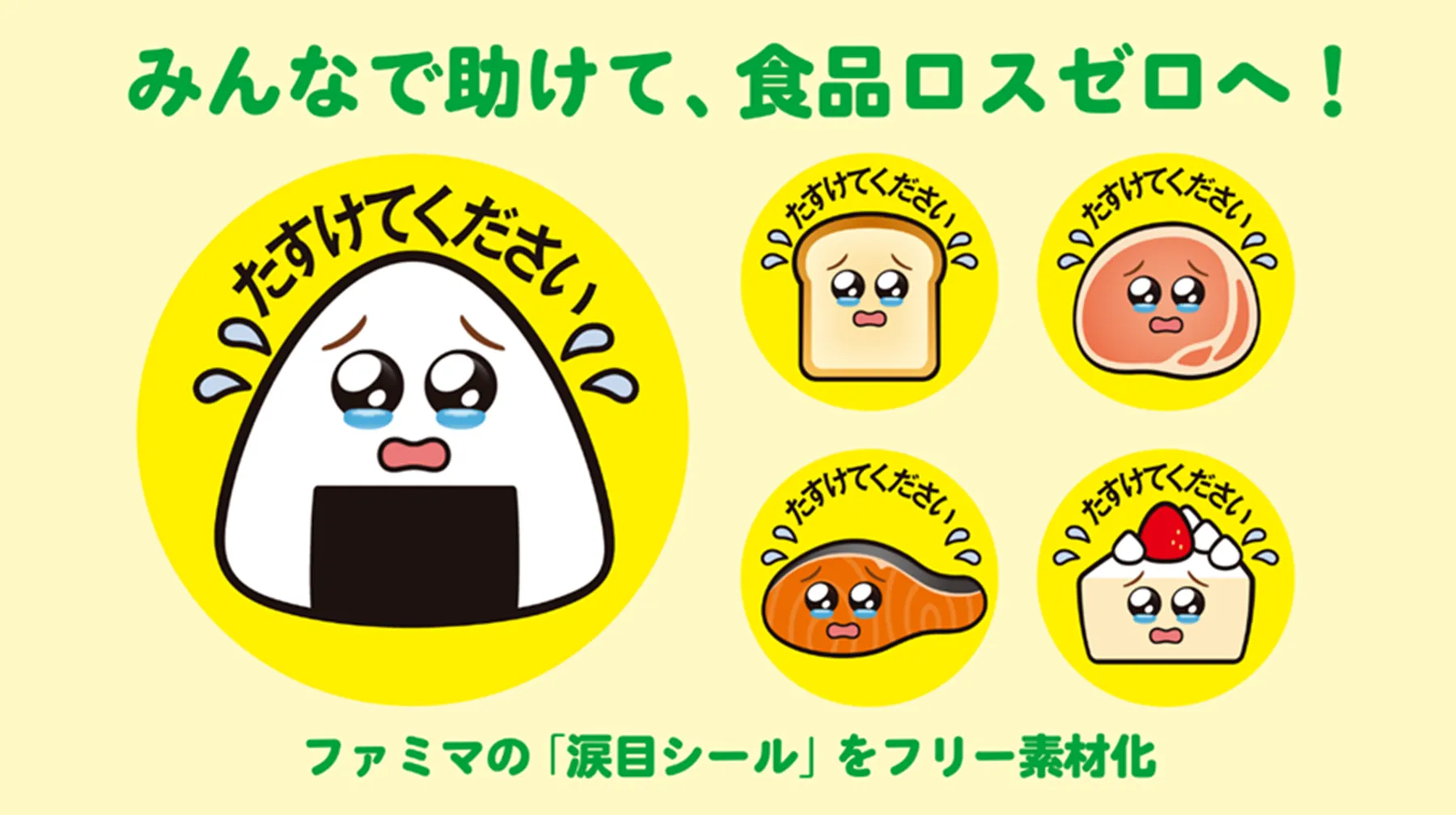
“Help me,” pleads a rice ball character, staring at you with teary eyes. This is the “Teary-Eyed Sticker,” an innovative initiative by FamilyMart, one of Japan’s major convenience store chains, to reduce food loss. This unique sticker, placed on products nearing their expiration date, is now capturing the hearts of consumers and on the verge of becoming a major movement involving society as a whole.
What is the “Teary-Eyed Sticker”? A Small Revolution That Changed Consumer Mindsets
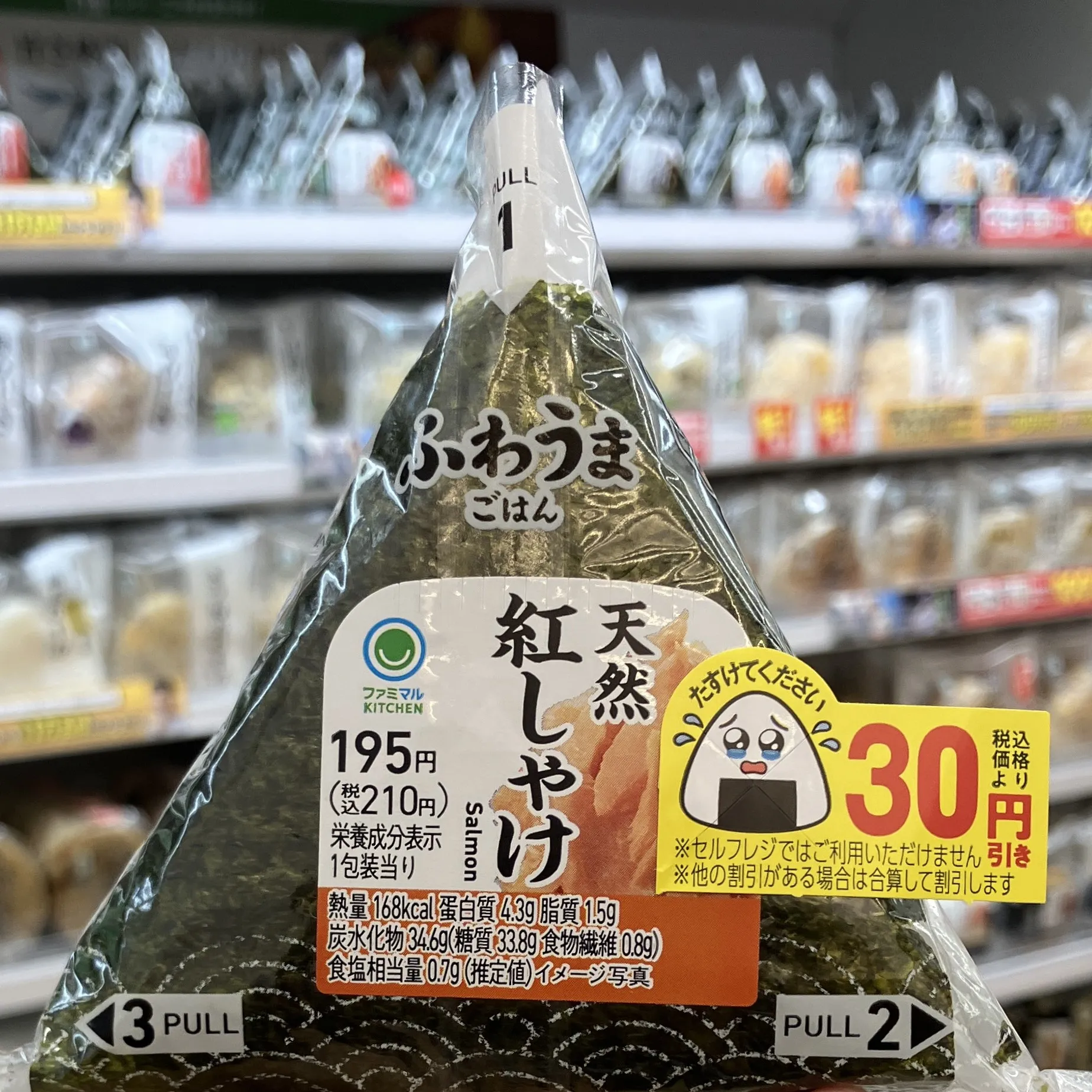
The “Teary-Eyed Sticker” is not just a simple discount sticker. On products like rice balls and bento boxes nearing their expiration, a character with teary eyes is depicted alongside the discount amount and the earnest message, “Help me.” Behind this idea lies “food loss,” one of Japan’s significant social problems.
Previously, discounted products carried a negative image of being “leftovers,” and not a few consumers felt a little embarrassed to buy them. However, this sticker has broken down that psychological barrier. The greatest factor in this initiative’s success is that it transformed consumer consciousness from the act of “buying a discounted item” to the positive action of “helping a character in need.” Many customers have commented, “I can buy it without hesitation if I think of it as helping,” showing how this small character has brought about a major shift in awareness.
Incredible Effects! The Power of the “Teary-Eyed Sticker” by the Numbers
The effects of the “Teary-Eyed Sticker” have been astonishing. In a pilot test conducted in October 2024, the purchase rate improved compared to conventional discount stickers. Following this, when the initiative was officially rolled out in stores nationwide from March 2025, its momentum accelerated further. One study showed an average increase of 4 percentage points in the purchase rate, with some stores seeing a boost of over 10 points.
Even more noteworthy is the actual change in waste volume. Since this initiative began, waste from ready-to-eat meal products at FamilyMart stores has been reduced by about 5% compared to the previous year. When calculated for stores nationwide, this achievement indicates a potential reduction of about 3,000 tons of food waste annually, demonstrating the magnitude of its impact.
Entering a New Stage: The “Teary-Eyed Sticker” Becomes a Society-Wide Initiative
Then, on October 22, 2025, FamilyMart made a surprising announcement to extend this success into a greater social contribution. The company decided to offer the “Teary-Eyed Sticker” illustrations as free-to-use materials. Behind this decision is a strong desire to “expand the effects of food loss reduction beyond just FamilyMart to society as a whole.” This allows anyone, regardless of industry or scale—supermarkets, small shops, restaurants—to join this “teary-eyed movement.”
New Friends Join In! The New “Teary-Eyed” Characters
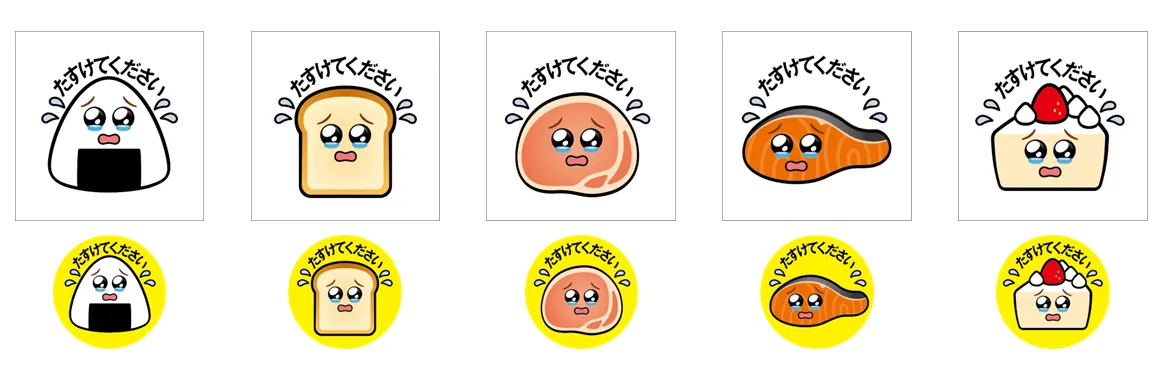
With the release of the free materials, new friends have joined the original “rice ball” character. Four new types of illustrations—bread, meat, fish, and cake—have been added, bringing the total to five. This makes it easier to use the “Teary-Eyed Sticker” on a more diverse range of foods, from products in bakeries, butcher shops, and fish markets to patisseries. The troubled face of the bread and the tearful fish character are so adorable you’ll instinctively want to lend a hand.
The “Teary-Eyed” Circle Is Already Expanding
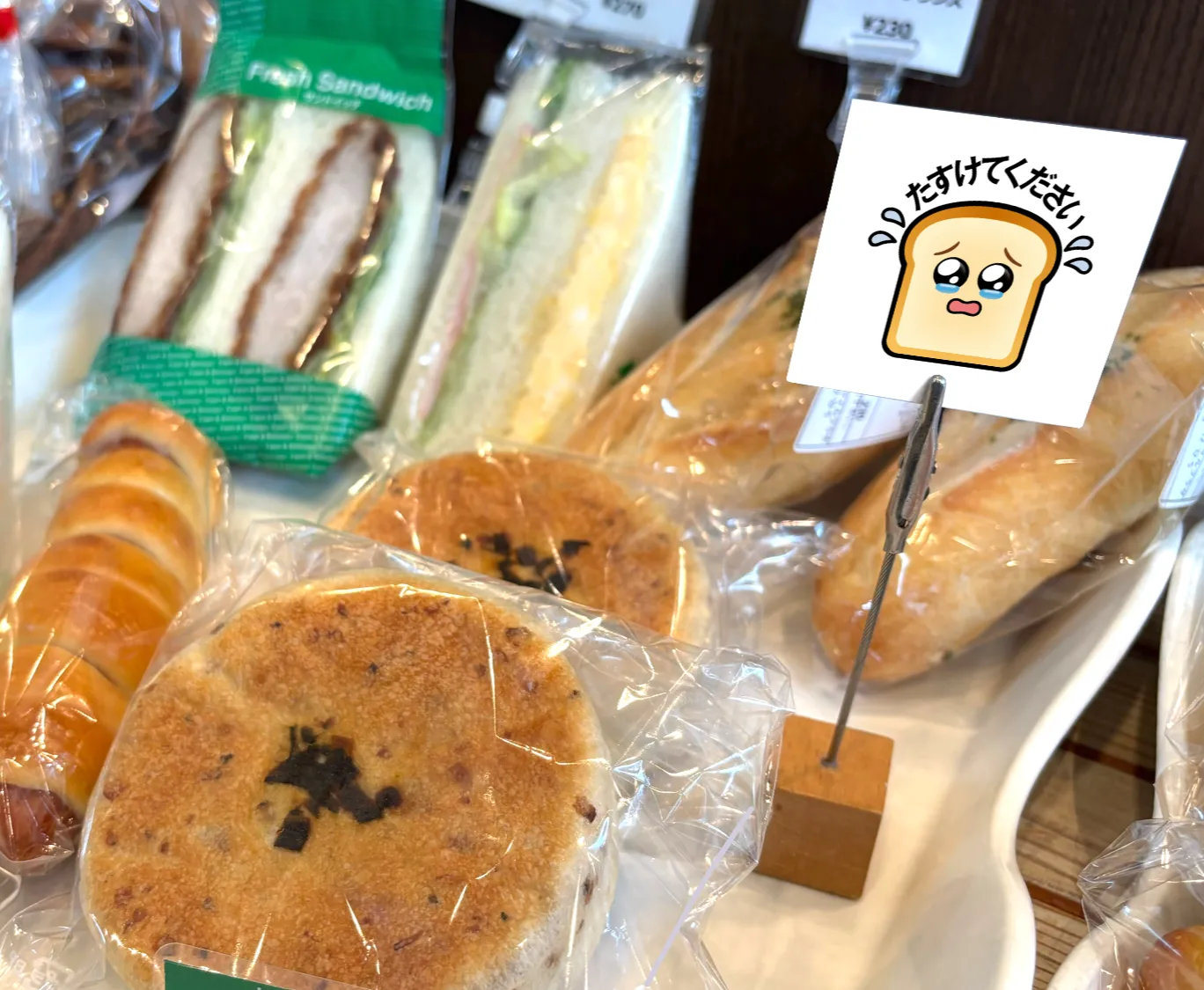
The initiative has seen immediate adoption since its announcement. For example, in Meguro Ward, Tokyo, the initiative has already been adopted in six locations in cooperation with the ward, including the ward office restaurant, welfare shops, and local Japanese confectionery stores. An idea that started in a convenience store is now involving local government and taking root in the community. The free materials can be downloaded by anyone from FamilyMart’s official website and can also be easily printed as stickers using the multi-function copiers in their stores.
The Uniquely Japanese “Mottainai” Spirit Takes Form
The “Teary-Eyed Sticker” initiative could be described as a modern expression of “mottainai,” a value deeply rooted in Japanese culture. The spirit of cherishing food and avoiding waste is sublimated into a fun and positive action through empathy for the characters and a desire to “help.” This attempt to solve a serious social problem with humor and kindness may offer many valuable insights for people all over the world.
This small sticker is changing consumer awareness, crossing corporate boundaries, and creating an opportunity for society as a whole to tackle the major challenge of food loss. If you happen to see a product with this “Teary-Eyed Sticker” during a visit to Japan, please consider answering its “SOS.” That single choice is connected to a big step in saving our planet.
Post a Comment